


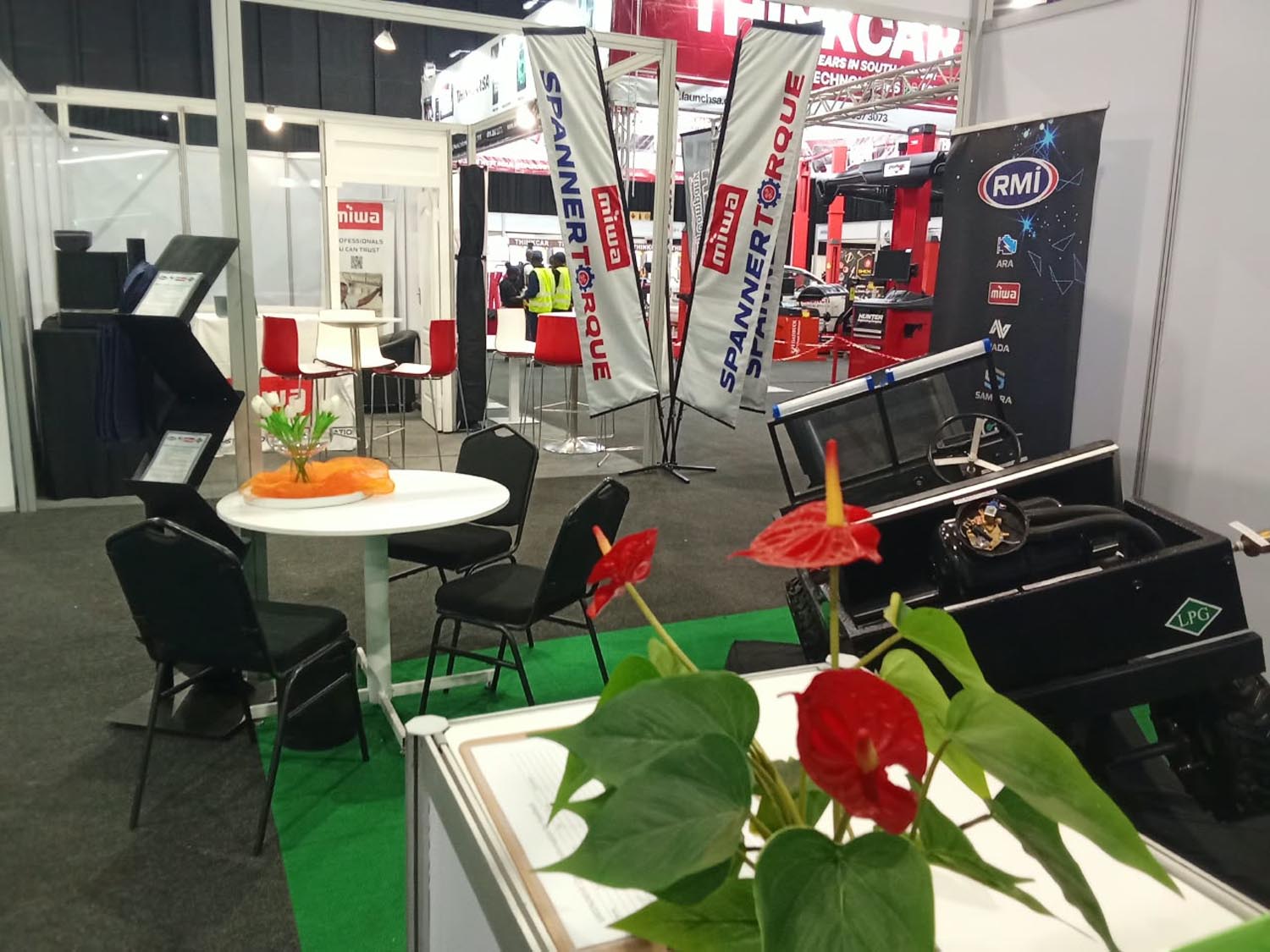
As rising fuel costs and the transition to cleaner mobility put pressure on South African motorists and businesses, the Automotive Remanufacturers’ Association (ARA), a proud association of the Retail Motor Industry Organisation (RMI),will showcase the potential of LPG Autogas at Automechanika Johannesburg, taking place at Gallagher Convention Centre from 27 to 29 October.
LPG Autogas offers a potential way for e-hailing drivers, fleet operators and other high-mileage motorists to reduce fuel costs and vehicle emissions without having to replace their existing vehicles, provided they are suitable for conversion.
According to accumulated figures cited by GreenDrive Small and Medium Enterprises (SMEs), supported by conversion kit manufacturers and end user feedback, LPG Autogas can deliver fuel savings of between 40% and 50% when compared with petroland around 30% when compared with diesel. Actual savings depend on factors such as fuel prices, vehicle efficiency, driving conditions and conversion costs.
“South Africa needs practical mobility solutions that balance affordability with environmental responsibility. LPG Autogas offers motorists and businesses another option to manage operating costs while supporting the transition to lower-emissiontransport,” says Attie Serfontein, National Director of ARA.
A practical option for the transition
ARA supports the exploration of alternative energy solutions to help the automotive aftermarket adapt to evolving vehicle technologies and mobility needs.
“While LPG Autogas is not a zero-emission fuel, it can offer environmental benefits compared with conventional fuels,” explains Serfontein. Local GreenDrive figures, aligned with European Community (EC) and European Union (EU) standards,indicate that it can reduce carbon dioxide emissions by up to 21% and fine particulate matter by up to 95%, while also significantly reducing harmful nitrogen oxide emissions. Actual reductions vary according to the vehicle and operating conditions.
Globally, Autogas is an established alternative automotive fuel, with more than 28 million vehicles and over 82,000 refuelling stations in use. Countries including Turkey, South Korea, Poland and India have incorporated it into their broadertransport energy mix.
For South Africa, wider adoption could diversify transport energy options, support improved urban air quality and give motorists and fleet operators another way to manage fuel expenditure.
“LPG Autogas is not a replacement for every mobility solution, nor does it remove the need to prepare for electric and hybrid vehicles. It provides an additional option available today, alongside the development of other new-energy technologies,”Serfontein says.
Opportunities for the automotive aftermarket
The growth of alternative fuels also creates opportunities for workshops, technicians and automotive businesses to develop new services. However, wider adoption depends on the availability of technical skills, appropriate equipment, safeinstallation practices and professional maintenance.
“South Africa has an opportunity to develop an Autogas sector that supports affordable mobility, cleaner transport and greater energy resilience. This requires businesses and technical practitioners to have the skills and knowledge to participatesafely and professionally. Safety, compliance and sound technical standards will be essential to building consumer confidence,” says Serfontein.
At Automechanika Johannesburg, ARA will showcase LPG Autogas and engage with industry stakeholders on its role in South Africa’s mobility future.