



Steer-by-wire is gaining attention as Asia-Pacific (APAC) automotive markets transition toward electrification, more software-led vehicle architectures, and advanced driver-assistance functions.
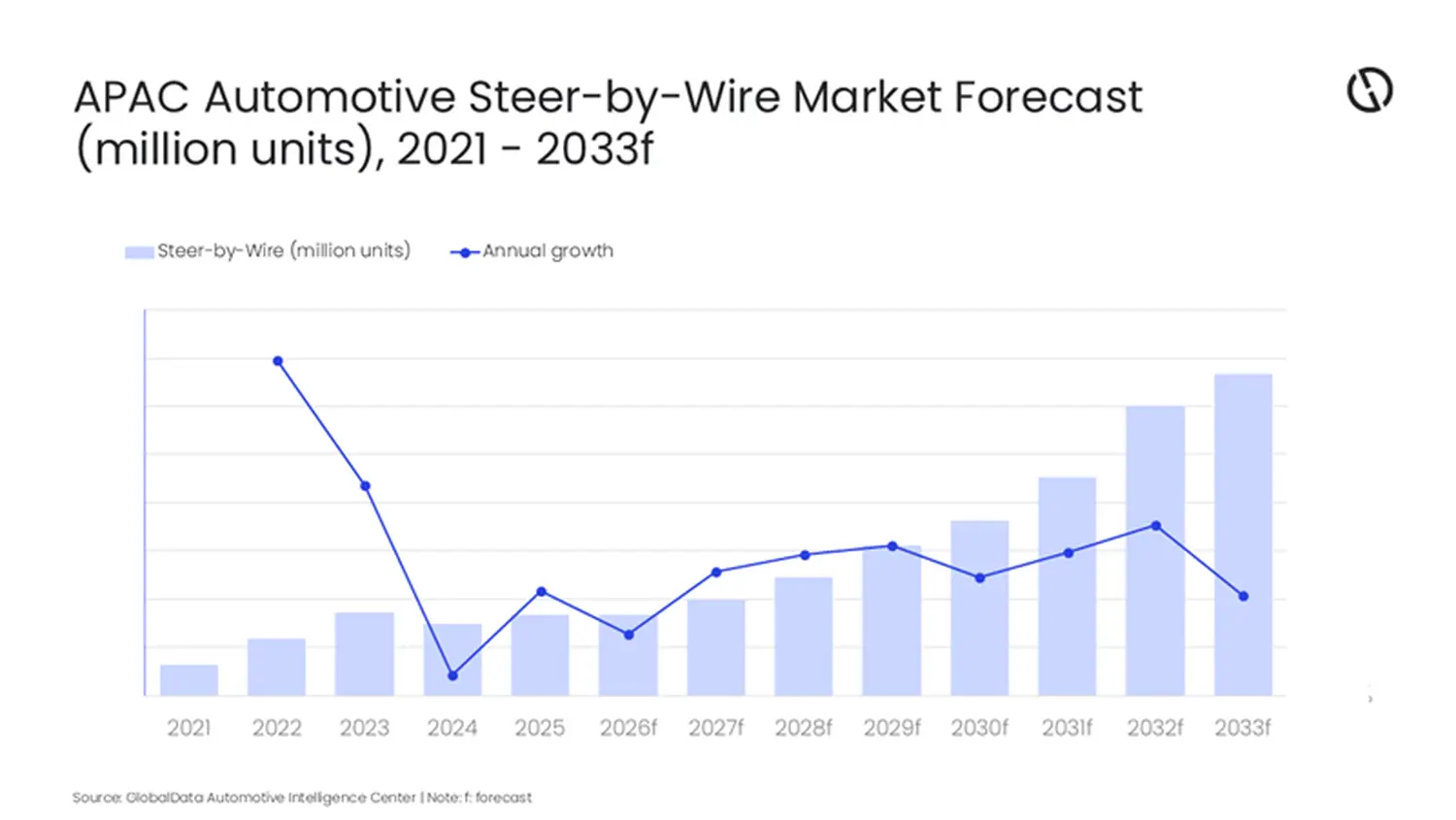
Its relevance in the region is less about replacing a conventional component and more about supporting vehicle designs and driving experiences suited to congested cities, varied road infrastructure, and changing consumer expectations. Against this backdrop, the APAC automotive steer-by-wire market is projected to grow at a compound annual growth rate (CAGR) of 21.9% between 2026 and 2033, according to GlobalData, a leading intelligence and productivity platform.
GlobalData’s latest report, “Global Sector Overview & Forecast: Steering Systems Q3 2026,” reveals that the APAC automotive steer-by-wire market is expected to grow from an estimated volume of 0.3 million units in 2026 to 1.3 million units in 2033.
Madhuchhanda Palit, Automotive Analyst at GlobalData, comments: “Dense urban areas across APAC create everyday conditions in which easier low-speed maneuvering can hold clear value. Narrow parking spaces, compact residential streets, frequent U-turns, and crowded, mixed-traffic environments place a premium on steering systems that reduce effort without making drivers feel detached from the road.
“Steer-by-wire is increasingly developed alongside variable steering response, rear-wheel steering, active chassis systems, and automated driving functions. These integrations support easier parking, improved turning performance, and more controlled vehicle behavior across varying speeds and road conditions.”
Palit continues: “The region’s rapid shift toward electric vehicles (EVs) is also supporting the adoption of steer-by-wire. New EV platforms give manufacturers more flexibility to reconsider vehicle packaging, cabin design, and the integration of electronic controls. For consumers, this may translate into more usable cabin space and steering characteristics that can be adapted to city driving and highway travel.”
Regional EV manufacturers may use the technology to establish a software-focused product identity, while established automakers and suppliers are likely to emphasize reliability, redundancy, and familiar driving behavior. In price-sensitive APAC markets, wider adoption will depend on whether manufacturers can introduce the system without a substantial cost premium and explain its everyday benefits in terms consumers recognize.
Palit concludes: “Steer-by-wire represents a structural shift in vehicle control that aligns with the broader electrification and digital transformation underway in APAC. While mechanical decoupling requires manufacturers to build consumer trust through demonstrable safety redundancy, the system delivers tangible advantages in urban maneuverability and interior packaging. Long-term adoption across the region will depend on regulatory certification pathways, cost parity with conventional electric power steering, and how effectively engineers tune synthetic steering feel to meet diverse driver expectations. Top of FormBottom of Form”