


How long should a community wait for a broken water pipe to be repaired? Are municipalities spending enough on maintaining infrastructure before it fails? And are municipal engineers being given a meaningful role in decisions that shape the future of South African cities?
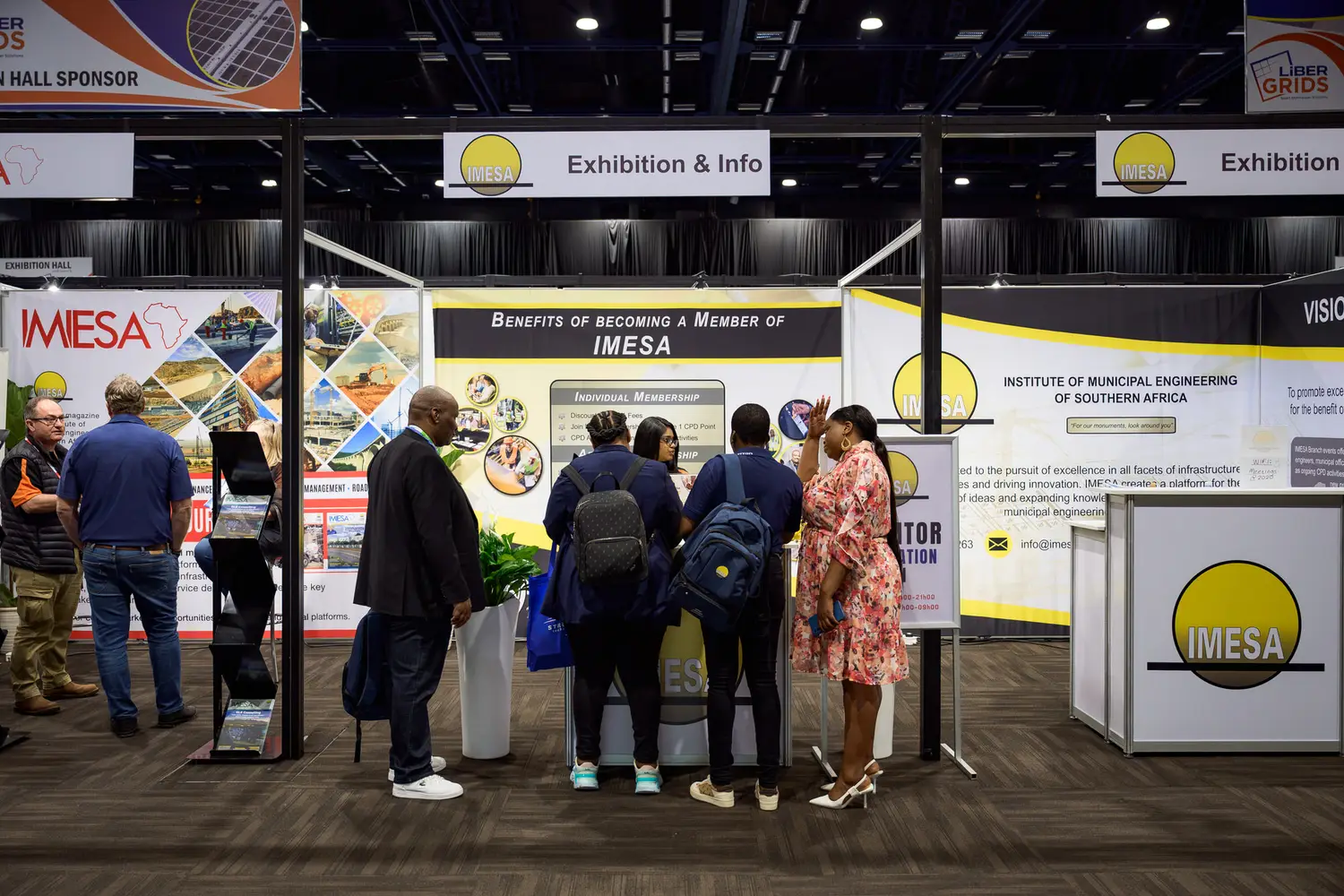
These were among the challenging questions raised at the annual Institute of Municipal Engineering of Southern Africa (IMESA) conference in Durban, which brought together 1 160 engineers and municipal officials.
Discussions at the event highlighted the urgent need for municipalities to strengthen technical capacity, prioritise infrastructure maintenance, embrace appropriate technology and ensure that engineering expertise plays a central role in municipal decision-making. Since its inception 89 years ago, the IMESA Conference and Exhibition has grown to become one of the most important events for the engineering profession, offering delegates a vital opportunity to learn, share knowledge and network.
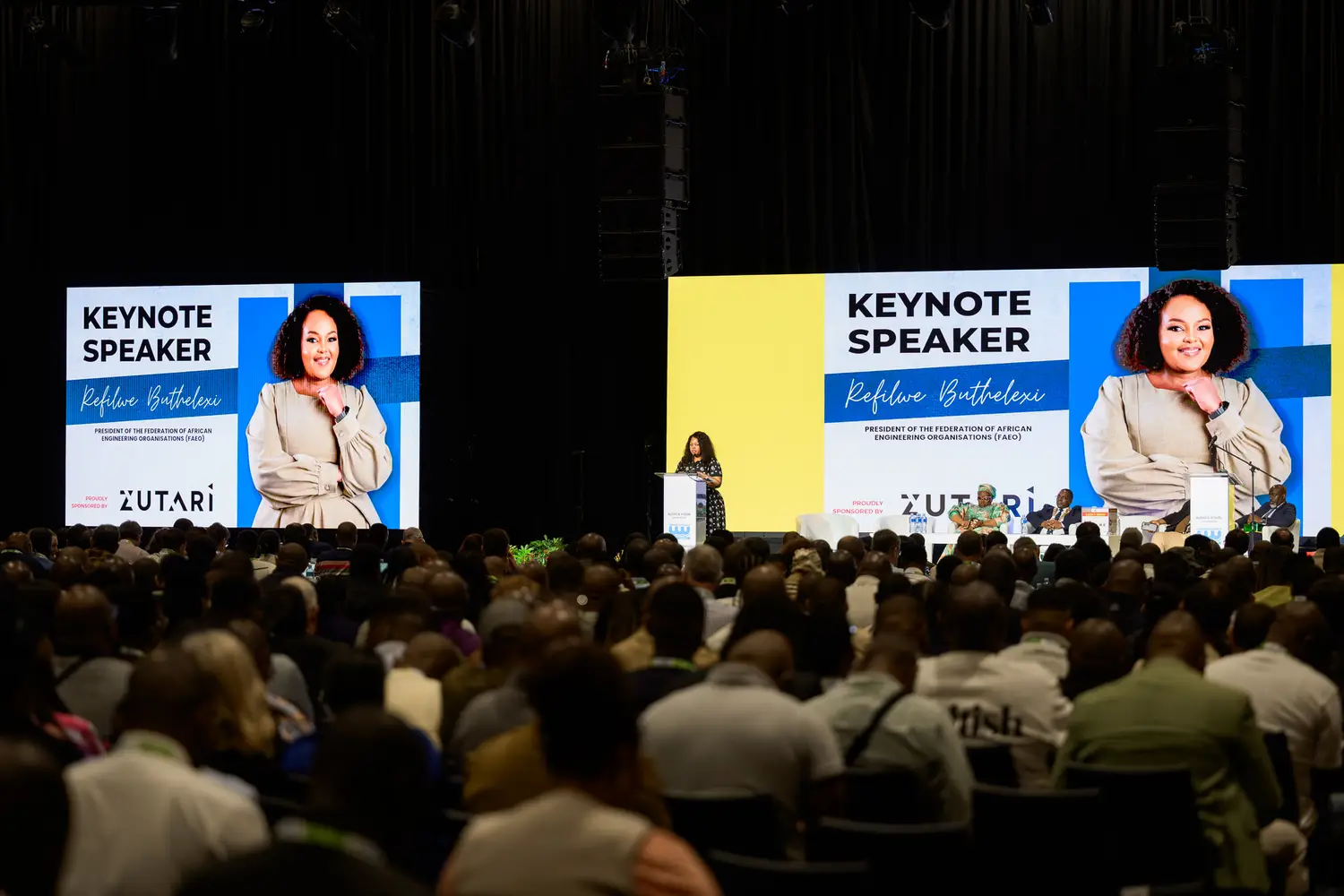
This year’s keynote speaker Refilwe Buthelezi, who is the President of the Federation of African Engineering Organisations, former Engineering Council of South Africa (ECSA) President and a senior figure at Rand Water, challenged delegates to consider whether public infrastructure spending was genuinely delivering value to communities. She emphasised that engineers, technologists, technicians and artisans all form essential links in the engineering value chain. She said that municipalities need to measure what matters. “Are residents adequately served? How long does it take to repair a broken water pipe? Are infrastructure assets being maintained according to their condition and expected lifespan?”
Maintenance is key
The importance of professionalising municipal engineering and building engineering capacity in municipalities was a recurring theme at the conference. Without technical expertise and professional management, the mandate of efficient service delivery will not be realised, the speakers stressed. They noted that maintenance is key and emphasised the importance of proactive rather than reactive responses to infrastructure issues.
Discussions at the conference also highlighted the importance of professional development, mentorship and retaining technical skills in local government. Experienced engineers were encouraged to mentor younger professionals, while the contribution of young engineers was recognised as increasingly important. Delegates also heard calls for greater recognition, protection and regulation of artisans, whose practical skills are indispensable to infrastructure implementation.
Climate resilience, particularly flood management and water security, featured prominently in the technical programme. Presentations explored the importance of collecting reliable rainfall and flood data, developing effective early-warning systems that communicate directly with communities and incorporating flood-risk considerations into infrastructure design. Delegates were reminded that compliance with engineering standards does not necessarily guarantee safety when extreme weather events exceed design capacity. Understanding historical flood records, community preparedness and the ability to recover from disasters must all inform infrastructure planning.
Water security
Water security was examined in a compelling case study of Prince Albert and the presenters showed why communities in water-stressed and arid regions cannot rely on a single water source or intervention. Sustainable solutions require a holistic approach, sound data and an understanding of local conditions.
Discussions around digital transformation were further highlights of the 2026 IMESA Conference. The attendees explored how municipalities can move from traditional methods to more efficient, technology-enabled systems, while ensuring that investments are appropriate to their circumstances and levels of digital maturity.
The use of drones to inspect and monitor water and wastewater infrastructure illustrated the practical benefits of innovation. Faster data collection, earlier identification of faults, improved decision-making, reduced inspection costs and lower risks to personnel can all contribute to more reliable infrastructure and better service delivery.
Other technical presentations explored sustainable construction materials, including the use of industrial waste products in environmentally friendly mortars, recycled concrete aggregate to reduce landfill pressure and virgin material extraction, and engineered rock-filled mattresses to protect riverbanks against erosion.
The conference also addressed the growing complexity of municipal planning and service delivery. Rapid urbanisation, densification and informal development are challenging traditional infrastructure design and service delivery models. Delegates examined the need to reassess design norms to ensure that growing communities have access to adequate water, sanitation, stormwater management and waste services.
Skills, resources and professional support needed
Public procurement, disaster management funding and the implementation of legislative reforms were also discussed. A key concern was whether municipalities have the technical capacity to implement new requirements effectively. Regulatory and legislative changes must be accompanied by the skills, resources and professional support needed to translate them into results. IMESA asserts that municipalities must strive to meet the COGTA regulated ratio of three technical service delivery staff members (like engineers, planners and artisans) for every one support staff member (such as human resources, finance and supply chain management).
The importance of understanding the full lifecycle costs of infrastructure decisions was another recurring message. Engineers have a responsibility to understand not only what assets cost to build, but also how much they will cost to maintain, when they are likely to fail and what is required to extend their useful lives.
IMESA expressed its gratitude to all the 2026 paper presenters for their contribution and willingness to share their research, experience and technical expertise. This year’s Best Paper winners were Mike Greatwood (in the category for IMESA members) and Joshua Spooner and Ione Loots (in the category for non-members). Greatwood’s paper examined the water services amendment bill, including the implications, risks and strategic responses needed. The paper presented by Spooner and Loots explored rethinking synthetic design storms to better predict real-world urban runoff responses and protect communities from flash floods.
The institute has announced that the 2027 IMESA Conference will take place at Emperors Palace in Johannesburg from 3 to 5 November 2027 with the theme “Building Infrastructure – Creating Opportunities”. The Call for Papers is now open, and engineering professionals are invited to submit their work and contribute to the conversations, insights and practical solutions shaping the future of municipal engineering. The official abstract submission form is downloadable from the IMESA website: www.imesa.org.za