


A model to build competitive, sustainable, corporatised and investment-ready enterprises in Africa
The Founding 50 unites entrepreneurs, advisors, funders, insurers, technology partners, industry associations and incubators.
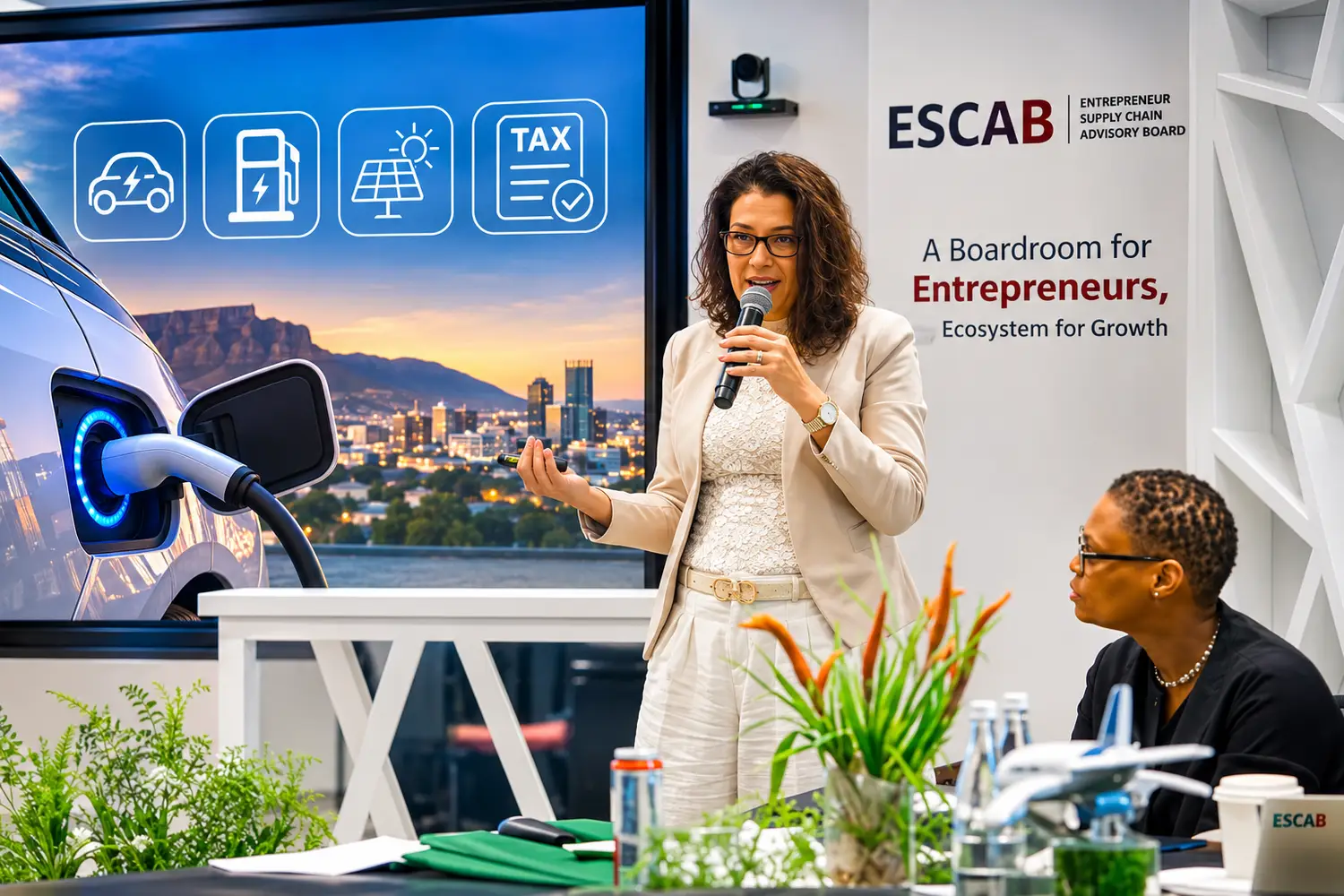
Entrepreneurs who graduate from incubation and enterprise development programmes often lose access to the strategic guidance they still need to grow. The Entrepreneur Supply Chain Advisory Board (ESCAB), launched by Sincpoint on Friday 13 November with the support of Absa, aims to close that gap by giving entrepreneurs ongoing access to board-level expertise in governance, financial oversight, risk managementand market access. The initial focus is the transport and logistics sector.
Established by Sincpoint, ESCAB introduces a structured and collaborative advisory ecosystem designed to address a persistent gap in enterprise development:the lack of sustained access to strategic board-level guidance, industry expertise, governance support and commercial networks for entrepreneurs as they grow their businesses.
Supported by Absa, the launch brought together the Founding 50, a collective comprising advisory board members, entrepreneurs, representatives from the insuranceand technology sectors, funders, transport industry associations and incubation companies. The Founding 50 represents the foundation of an ecosystem that recognises that building competitive and sustainable enterprises requires more than training, mentorshipand access to funding. It requires the collective contribution of industry, financial institutions, experienced professionals, technical experts and market participants.
A BOARDROOM FOR ENTREPRENEURS
At the heart of ESCAB is a compelling proposition: entrepreneurs must have access to the boardroom conversations, expertise and networks that influence businessgrowth.
“Enterprise development programmes have played an important role through training, mentorship, incubation, funding readiness and business development,” explainsLebo Letsoalo, Founder of Sincpoint and ESCAB. “However, many businesses reach a stage where they require a different level of support to transition from owner-managed operations into professionally managed, governed, competitive and investment-ready enterprises.”
ESCAB is designed to complement existing Enterprise and Supplier Development (ESD) and incubation programmes driven by corporates, financial institutionsand development institutions. Rather than replacing these interventions, it provides an additional layer of structured advisory support that can continue beyond the formal programme period.
“The intention is to ensure that entrepreneurs do not lose access to strategic guidance once they graduate from an incubation or enterprise development programme,”continues Letsoalo. “Through a structured advisory model, businesses can continue receiving guidance on governance, financial oversight, risk management, operational efficiency, strategic positioning, market access and growth.”
ESCAB seeks to institutionalise continuity of board advisory support as an integral part of enterprise development. Graduating from an incubation programmeshould not mean graduating from access to the expertise and guidance required to build a sustainable business.
WHY ESCAB IS A MUST FOR AFRICA
Speaking at the launch, Letsoalo called for a fundamental shift in how Africa supports entrepreneurs.
“We have invested significantly in enterprise development, incubation, training and mentorship. These interventions are necessary, but we must ask ourselveswhat happens after an entrepreneur graduates from a programme. Who continues to guide the business? Who challenges its strategy? Who supports its governance, financial oversight and readiness to attract investment? Who opens doors to industry networks andmarkets?
“ESCAB responds to this gap. It is about creating a permanent and structured advisory ecosystem that ensures entrepreneurs have continued access to theexpertise and strategic guidance required to build competitive, sustainable, corporatised and investment-ready enterprises”
SAAFF AND ESCAB: ALIGNING THE ENTERPRISE DEVELOPMENT PATHWAY
Dr Juanita Maree, CEO of the South African Association of Freight Forwarders (SAAFF) spoke about SAAFF’s SMME desk, highlighting its alignment with ESCAB.“SAAFF’s Enterprise Development Pathway takes a whole chain’’ perspective,” emphasised Maree. “This creates potential for partnership with ESCAB, connecting entrepreneurs to industry knowledge, opportunities and continuing strategic advice across the valuechain.”
ABSA: GOVERNANCE, TRANSPARENCY AND FINANCIAL OVERSIGHT
Absa representative Mr Bernard Vilakazi, a Sector Specialist: Transport & Logistics, reinforced the importance of transparency, governanceand financial oversight for funded entrepreneurs. “Access to capital must be matched by responsible financial management, accountability and sound governance,” he said, demonstrating how capital is managed, decisions made and risks monitored builds funderconfidence and readiness to engage investors and corporate partners.
TRANSPORT AND LOGISTICS: THE FIRST CHAPTER
ESCAB will initially focus on the Transport and Logistics sector, recognising its strategic importance to trade, industrial development, regional integrationand Africa’s economic competitiveness.
The sector is central to the movement of goods, access to markets and the functioning of supply chains across the continent. Yet entrepreneurs operatingwithin its value chains face significant barriers, including capital requirements, regulatory compliance, operational costs, technology adoption, access to contracts and the ability to meet demanding industry standards.
A LONG-TERM SOLUTION FOR AFRICA
ESCAB is not a once-off intervention ending with incubation. It aims to establish an enduring advisory mechanism supporting enterprises through differentstages of growth.
A SHARED RESPONSIBILITY
Letsoalo invited corporates, financial institutions, industry associations, professional bodies, government and entrepreneurs to actively participate ESCAB.
“The launch is only the beginning. ESCAB’s success will be measured by stronger businesses, unlocked opportunities, meaningful partnerships and enterprisesthat contribute sustainably to our economy.”
A BOARDROOM FOR ENTREPRENEURS. AN ECOSYSTEM FOR GROWTH.