


Road safety is the focus of a new partnership between South African precast concrete manufacturer Cape Concrete and REBLOC, an international specialist in vehicle restraint systems.
The agreement will see Cape Concrete manufacture REBLOC products under licence and introduce the systems to South Africa and the wider southern African market. The partnership combines REBLOC's engineering expertise and internationally established vehicle restraint technology with Cape Concrete's local manufacturing and distribution capabilities.
Cape Concrete is already manufacturing the REBLOC systems for the local market and will provide local customers with training and logistical support in order to successfully instal and maintain the systems. The company brings nearly a century of experience in precast concrete manufacturing to the table and provides REBLOC with access to established production facilities and local industry knowledge.
The partnership is aimed at making REBLOC's vehicle restraint systems more accessible across southern Africa with a focus on the long-term performance of road infrastructure.
Crash-Tested Barriers, Clear Accountability
South Africa’s roads carry heavy traffic, high speeds and work zones that change by the week. Vehicle restraint systems (temporary and permanent safety barriers) sit at the front of the protection offered to road users, site workers and the public. When those systems do not perform as specified, liability may extend to various parties involved, including the road owner, consulting engineer, main contractor, installer and/or the technology provider.
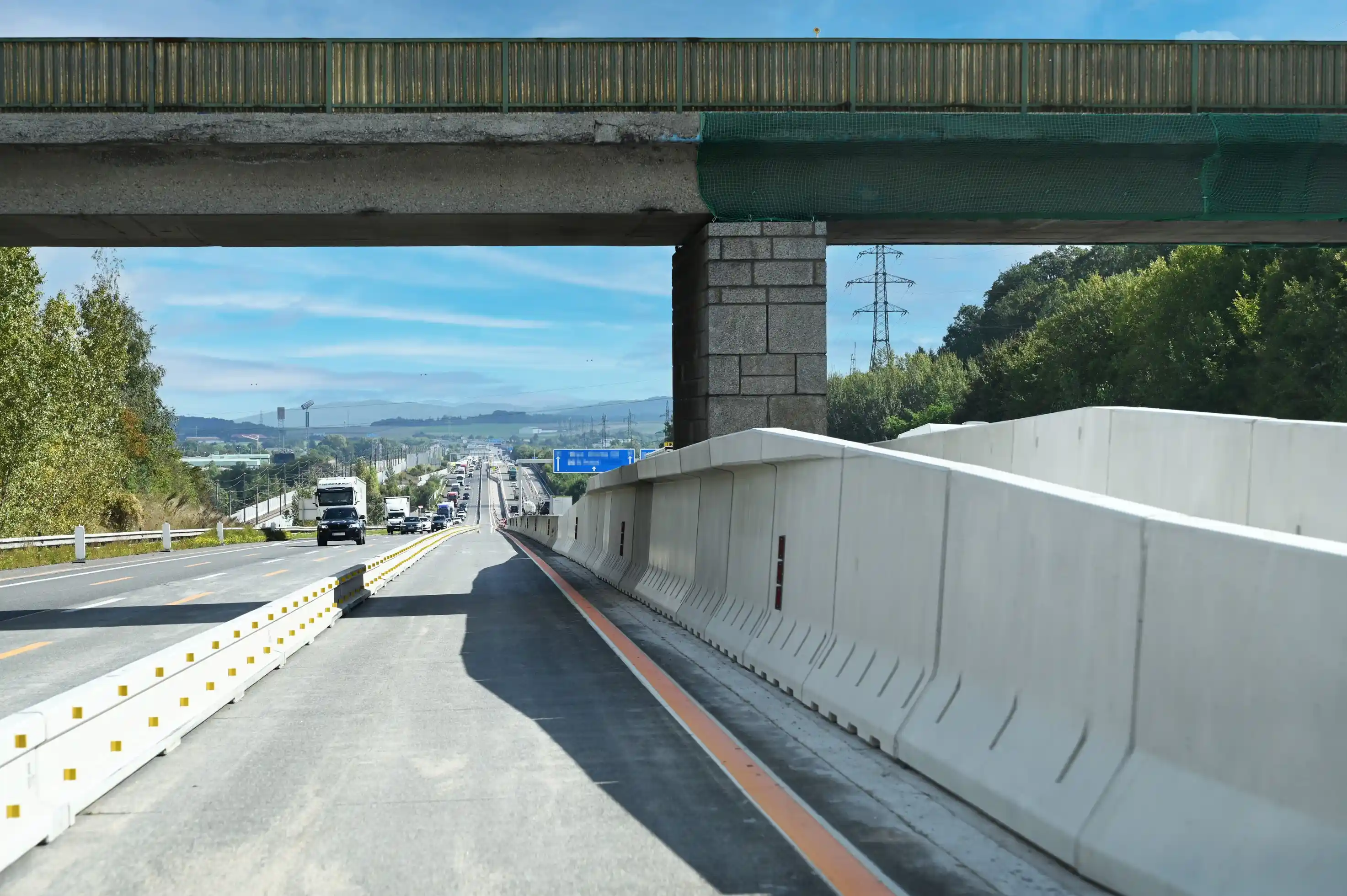
REBLOC, an internationally leading specialist in precast concrete vehicle restraint systems, has built its reputation on full-scale crash testing to EN 1317 and MASH standards. Focusing on EN 1317, the modular precast concrete barriers are tested to defined parameters, such as containment level (T1-H4b), working width (W1–W8) and vehicle intrusion. The patented integrated coupling system forms a continuous tension chain with no loose parts, so installation is quicker and performance is more consistent whether the barrier is used only during construction or left in place permanently. Cape Concrete is the exclusive South African partner, bringing these certified precast concrete vehicle restraint systems into local manufacture and technical support, training and supply to the South African market.
Liability Framework under South African Law
Road authorities, including SANRAL, provincial departments and municipalities, have statutory responsibilities relating to roads under their control. In certain instances, a failure to take reasonable steps to address foreseeable road safety hazards may also give rise to delictual liability. South African courts have held road authorities liable for injuries resulting from road defects, including potholes and inadequate drainage, where the authorities wrongfully and negligently failed to address foreseeable hazards. The appointment of independent contractors or consulting engineers does not simply absolve a road authority of liability, particularly where the authority has failed to discharge its own statutory responsibilities or exercise reasonable oversight in the circumstances.
Consulting engineers carry professional liability for temporary and permanent works design. Under the Construction Regulations 2014, designers must ensure restraint systems can support anticipated loads and perform safely. Where an engineer undertakes the design of an in-situ or rationally designed barrier, the engineer remains responsible for exercising reasonable professional skill and care in that design. Deficiencies in the design may give rise to professional or delictual liability.
By contrast, when a fully crash-tested system that meets EN 1317 (or MASH) and COTO Chapter 11 is specified and installed strictly to the tested configuration (certified factory production, correct lengths, proper end anchorages, approved connections and certified installation), the design engineer’s residual responsibility is limited to choosing the right system for the site and checking that installation followed the manufacturer’s manual. The performance liability for the declared containment level, working width and intrusion rating then generally shifts to the technology owner. Where the system is correctly specified, manufactured and installed in accordance with its tested configuration, the parties are better positioned to demonstrate that reasonable precautions were taken to address foreseeable risks. Such compliance can substantially reduce potential liability exposure.
Contractors have certain statutory obligations under Construction Regulation 7. Installing barriers outside their specified or crash-tested configuration may constitute a breach of the contractual requirements and, depending on the circumstances, their statutory obligations. Chief executive officers bear responsibilities under section 16 of the OHS Act, while construction managers, health and safety officers and other appointed persons may have additional statutory duties arising from their respective appointments. Failure to discharge these duties may result in criminal or civil liability.
COTO Chapter 11, Section 11.4 distinguishes method-specification systems from performance-based systems. Performance-based systems require conformity to EN 1317 (or MASH) plus manufacturer guarantees and compliance certificates. Where the prescribed performance is not achieved because the specifications or installation requirements were not followed, the responsible parties may be exposed to contractual, statutory or delictual liability. On the other hand, the correct specification and installation of a crash-tested system can substantially reduce these risks and provide valuable evidence that appropriate safety precautions were taken.
A Cautionary Story: A Hypothetical but Realistic Scenario
Consider this hypothetical but realistic scenario, built from principles established in recent High Court decisions including Hesse v SANRAL, Hayward v SANRAL and Van Staden v Department of Infrastructure. On a busy national route, a dual-carriageway upgrade required temporary concrete barriers for a deep excavation and night-time work zone. The engineer specified a crash-tested H2/W3 system under COTO Chapter 11.
Under programme pressure the contractor sourced a cheaper “equivalent.” The barriers were cast at an uncertified yard with a modified mould that omitted the tested coupling details. Installation was done by untrained labour; end anchorages were incomplete and several connections were improvised. Three weeks later a fully laden truck left the lane after a tyre failure. The barrier chain failed to contain and redirect the vehicle. Two workers were killed and several others seriously injured.
Applying the principles from the authorities cited above, a court could find joint and several liability in respect of one or more of the parties, where their respective wrongful and negligent conduct contributed to the harm suffered. The road authority could be held responsible for inadequate oversight of temporary works. The engineer could be found negligent for accepting a non-compliant substitution. The contractor and its appointed officers could be held liable under the Construction Regulations and common-law delict. Criminal charges under the OHS Act could follow. The resulting claims, investigations and legal proceedings could have significant financial and reputational consequences for the parties involved.
The Compliant Path Forward
REBLOC systems, manufactured and supported locally by Cape Concrete, are crash-tested to the parameters COTO Chapter 11 requires. When barriers are cast to the tested design in a certified facility and installed by trained people, the documented performance gives every party a defensible position.
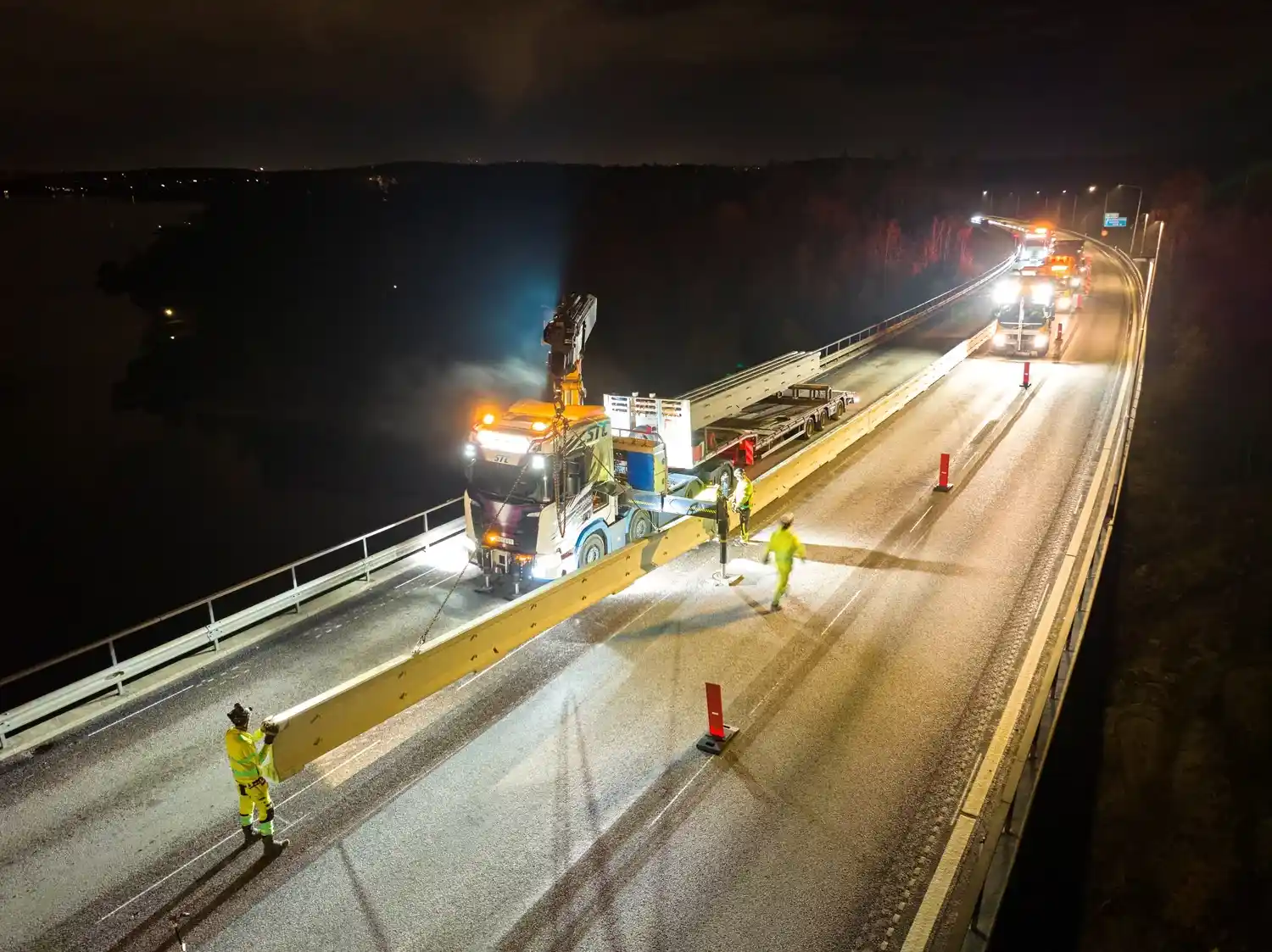
Beyond liability protection, a crash-tested precast solution has clear practical advantages over conventional in-situ median barriers. Factory production removes weather dependence and curing delays, so installation is faster and the time spent in the live median is shorter. Controlled manufacture delivers uniform quality and dimensional accuracy, which reduces defects and remedial work. Shorter installation periods also mean fewer workers and less plant in the high-risk median environment. The systems achieve high containment levels (H2–H4b) at tight working widths (W1–W5) with a narrow base and no foundation, which can reduce median width, earthworks and land take. Temporary units can later be relocated and anchored, so they become permanent.
For design engineers, specifying an appropriately crash-tested system and ensuring that their design and oversight obligations are properly discharged can significantly reduce professional liability risks. For road owners and contractors, documented compliance provides valuable evidence that reasonable precautions were taken to address foreseeable safety risks. Compliance keeps workers alive, protects the travelling public, and shields the people who sign the appointments. On South African road projects, specifying and installing genuine crash-tested REBLOC barriers is both good engineering as well as sound and forward-thinking risk management.