


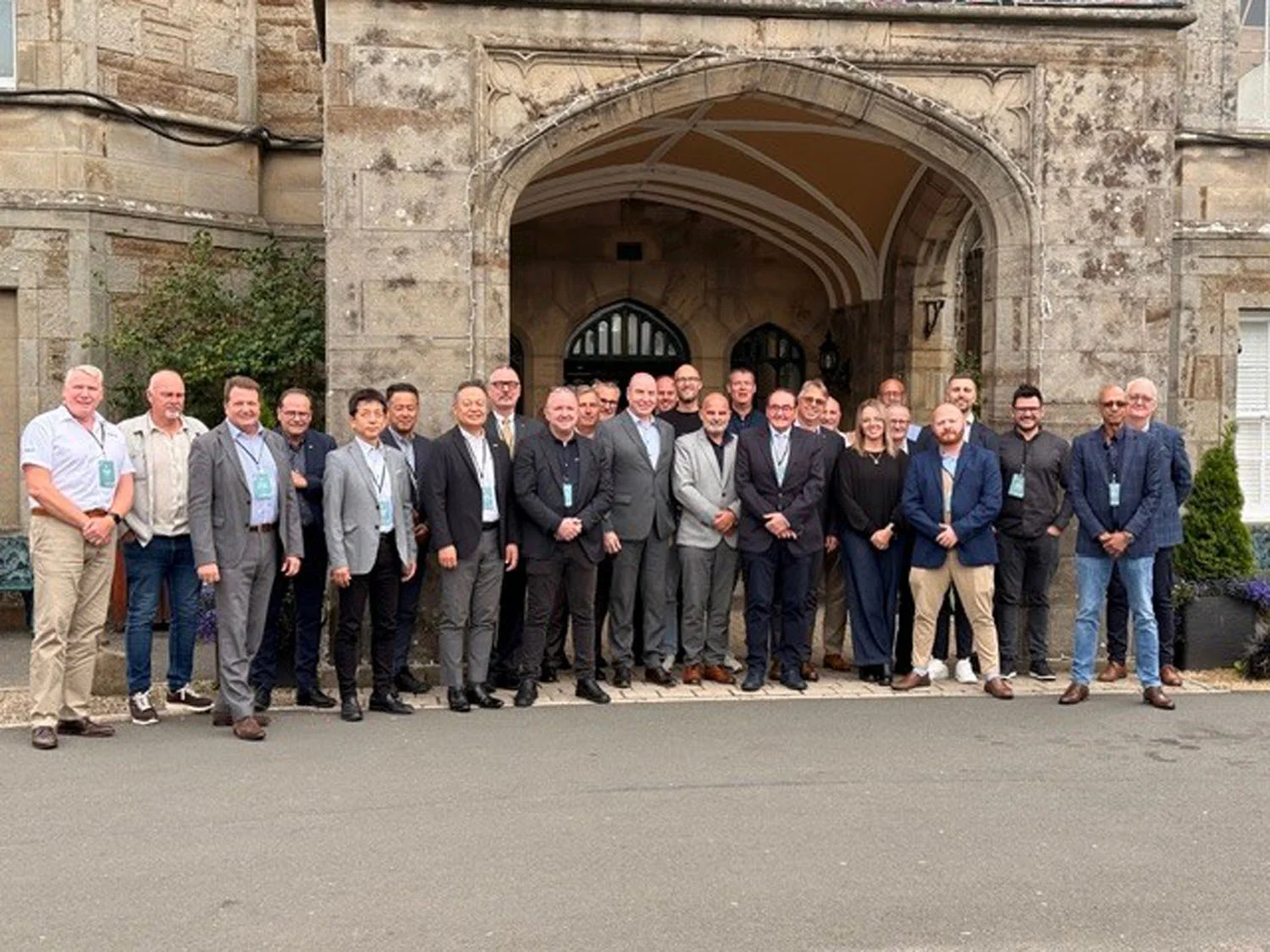
South Africa’s motor body repair industry has strengthened its international links with the South African Motor Body Repairers’ Association (SAMBRA), a proud association of the Retail Motor Industry Organisation (RMI), officially votedinto the Association Internationale des Réparateurs en Carrosserie (AIRC), the international federation of national organisations representing the vehicle and body repair sector.
The appointment positions SAMBRA as the representative for South Africa within a global network of national repair associations, creating new opportunities for international knowledge exchange, benchmarking and collaboration.
Established in 1970, AIRC’s member organisations collectively represent more than 50,000 vehicle repair and vehicle-building businesses internationally. The federation focuses on professional vehicle repair, international cooperation andissues shaping the future of the repair industry.
For SAMBRA, the membership comes at a time when the collision repair industry is becoming increasingly interconnected, with developments in vehicle technology, repair methodology, insurer and OEM requirements, skills, standards and sustainabilityincreasingly influencing markets across borders.
“The collision repair industry does not operate in isolation anymore. What happens in one market can quickly influence another, particularly when it comes to vehicle technology, repair standards, insurer and OEM requirements and the skillsneeded to work on increasingly sophisticated vehicles,” says Juan Hanekom, National Director of SAMBRA.
SAMBRA Chairman, Dev Moodley who presented at the conference, adds, “Being part of AIRC gives South Africa a seat at a much broader industry table. It allows us not only to learn from what is happening internationally, but also to contributethe South African experience and perspective to those discussions.”
He says SAMBRA’s recent participation in the AIRC international conference, as part of its broader European and UK industry benchmarking programme, highlighted the common challenges facing repairers across different markets.
These include skills shortages, increasing vehicle complexity, changing insurer and OEM requirements, sustainability pressures, technology and automation, electric vehicle repair capability, repair standards and access to vehicle repairinformation.
Hanekom says, “One of the most valuable insights from our international engagements is that many of the challenges facing South African repairers are not unique to our market. Repairers internationally are grappling with many of the samepressures. While some markets may be further ahead in adopting certain technologies or implementing particular standards, the gap in capability is not necessarily as wide as we sometimes assume.”
AIRC membership will provide SAMBRA with an ongoing platform to benchmark South Africa against international repair markets and identify emerging trends and risks at an earlier stage.
It will also support the association’s efforts to monitor developments in areas including EV repair, sustainability, end-of-life vehicles, repair information, training, technology and professional repair standards.
“For SAMBRA, this is about bringing relevant international insight home and turning it into practical value for the South African industry,” Hanekom says. “As collision repair becomes increasingly technology-driven, with EVs, advanced materials,electronics, repair information and new sustainability requirements, staying connected to international developments will help us prepare for change rather than respond to it after the fact.”
Through its AIRC membership, SAMBRA will strengthen relationships with international counterpart associations, benchmark local developments against global trends and ensure that South Africa remains part of the conversation shaping thefuture of collision repair.