


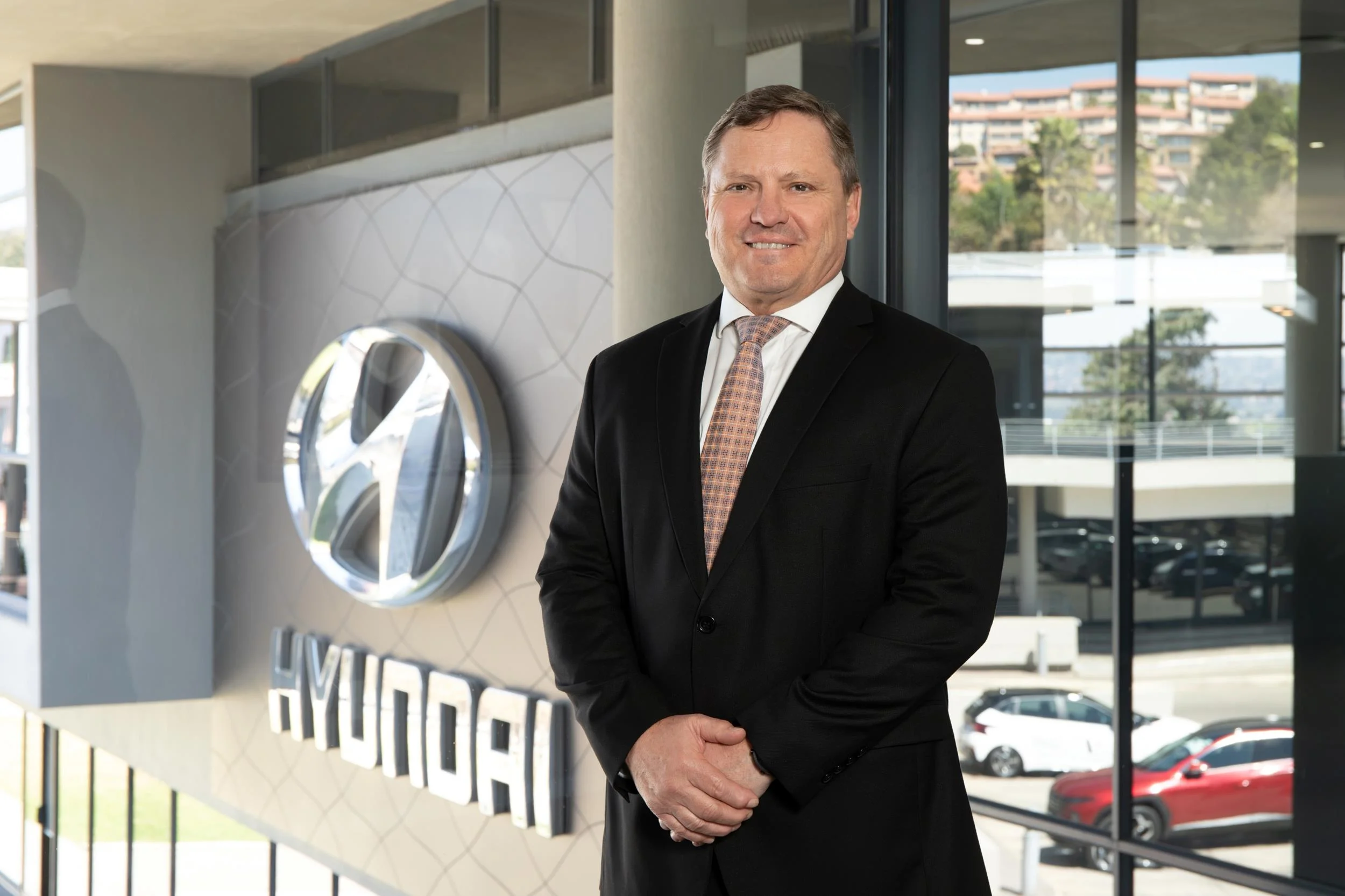
South Africa’s new-vehicle market is becoming one of the most competitive in the world but Hyundai Automotive South Africa CEO, Stanley Anderson believes the industry’s growing focus on purchase price risks overlooking one of the most important parts of vehicle ownership: what happens after the sale.
Anderson is well placed to make that argument. He joined Hyundai Automotive South Africa in 2001, becoming Marketing Director in 2004, Sales and Operations Director in 2015 and CEO in July 2025. Over that period, Hyundai has sold more than 800,000 vehicles in South Africa and established a national dealer footprint of approximately 100 outlets.
The industry is undergoing a structural shift. With 67 brands competing for consumer and fleet expenditure and new entrants, particularly from China, expanding rapidly, established manufacturers are being challenged to demonstrate more than sales volumes.
“A lower purchase price can certainly attract a customer,” said Anderson. “But the ownership equation goes much further. Depreciation, parts availability, repair times, dealer coverage and total cost of ownership all influence the value of a vehicle.”
Hyundai has an excellent aftersales performance as 90% of accident-damaged vehicles are returned to the road within 30 days. Its corporate customers’ vehicles are also tracked by VIN, with any unit remaining in a workshop for more than three days triggering intervention from its senior corporate team.
Anderson stated these systems demonstrate why infrastructure matters in an increasingly crowded market.
“A vehicle that is sitting in a workshop is not generating value for a corporate customer. Downtime has a real business cost, which is why aftersales performance is an important part of our competitive proposition.”
Hyundai currently ranks fourth in South Africa, with Anderson targeting a move into the top three within 3 years. The company is working with its global parent on a three to four-year product pipeline, evaluating potential models against South African market demand, specifications and pricing.
“Our next phase is about disciplined growth,” Anderson said. “We have built the infrastructure and the customer base. Now we need to continue investing in the right products, the right capabilities and an ownership experience that creates value over the long term.”
For Anderson, the next phase is about adding more Hyundai vehicles to the market by leveraging his more than 36 years of local automotive experience to steer the brand towards sustainable growth.