


The Retail Motor Industry Organisation (RMI) is proud to have hosted its very first Welding Competition highlighting the importance of creating practical, inclusive pathways into South Africa’s automotive and related industries.
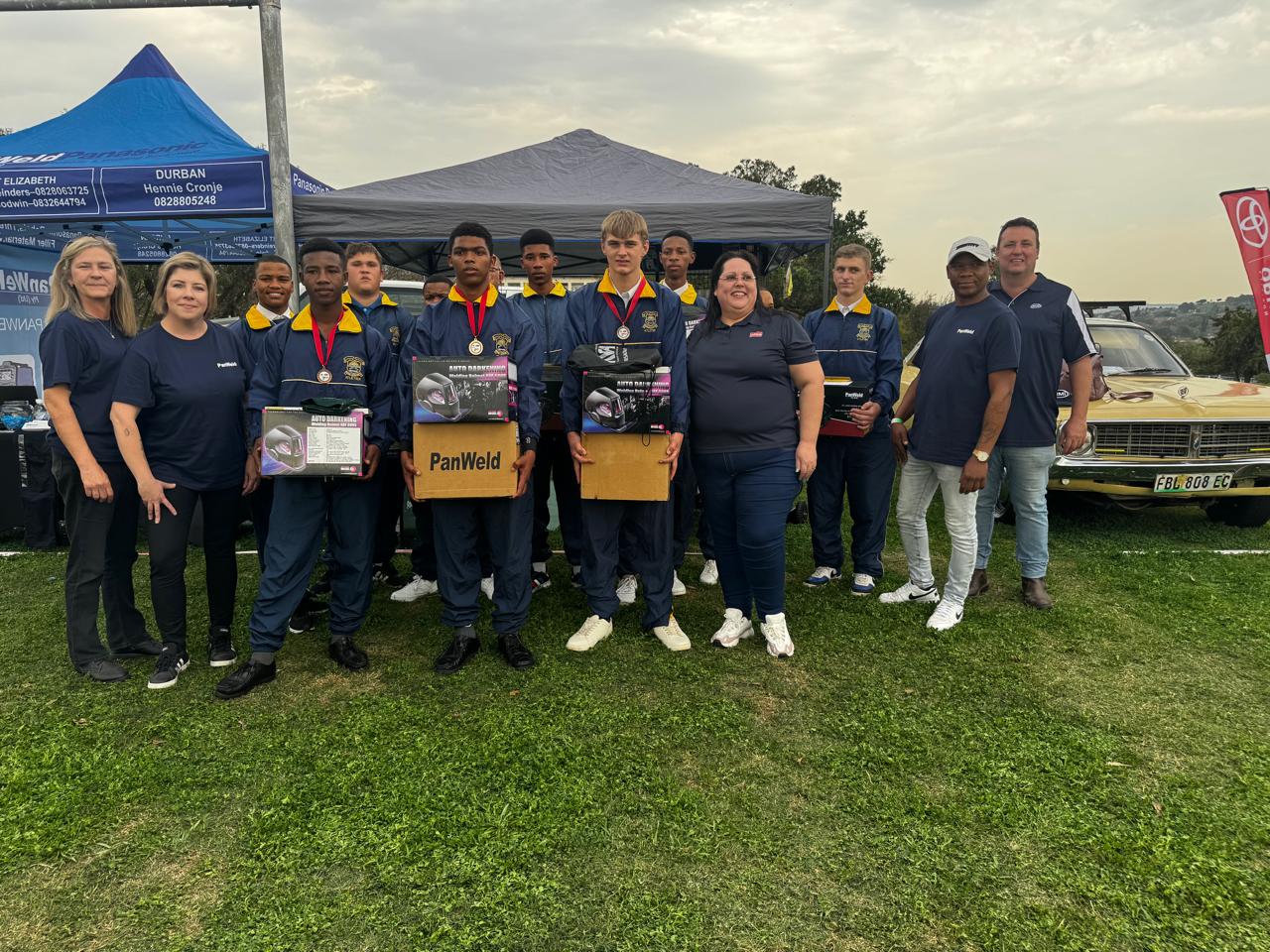
10 learnersfrom Bergsig Special School put their welding skills to the test as part of the bigger Motor Mech Show / Alles op Wiele Show hosted at Daniel Pienaar Technical High School in Kariega on 29 August.
This inaugural welding competition gave the Bergsig learners an opportunity to move beyond the classroom and demonstrate their practical abilities in front of an industry audience.
At the end of the day Rowelin Gert took top honours followed by Tristen Scheepers in second and Davi-Cleo Claasen coming in third place.
Peter van Mosseveld, RMI regional manager in the Eastern Cape, says, “For the Retail Motor Industry Organisation (RMI), which supports the Motor Mech initiative as part of its commitment to skills development and the future automotive workforce,the competition represents an important step towards exposing young people to the practical opportunities available within the motor industry.”
“As the automotive industry continues to evolve, the need to attract and develop skilled young talent has never been greater,” adds Attie Serfontein, National Director of the South African Vehicle and Bodybuilders’ Association (SAVABA).
“Through initiatives such as the Motor Mech Show, the RMI is helping learners experience the industry first-hand, transforming classroom theory into practical skills and exposing them to meaningful career opportunities. By investing inyouth today, we are securing the future sustainability, competitiveness and growth of South Africa’s motor industry,” says Van Mosseveld.
The participation of learners from Bergsig Special School added an important dimension to the event, demonstrating the value of creating opportunities for young people with different learning needs to showcase their practical capabilities.
“The participation of learners from Bergsig Special School was one of the most inspiring aspects of the event,” says Serfontein. “It demonstrated that the motor industry can and should create opportunities for all young people, regardlessof their circumstances or challenges.
“Inclusion is not only a social responsibility; it enriches our industry by unlocking talent, determination and potential that might otherwise go unnoticed. It shows how there is definitely a place in our industry for everyone who is willingto learn, contribute and excel,” says Serfontein.
For Bergsig Special School, the competition was about far more than determining a winner.
Technical Deputy Principal Leon Welgemoed says the opportunity gave learners the chance to experience a real industry environment, develop confidence and see the value of their practical skills.
“Our learners embraced the opportunity with tremendous enthusiasm. Their excitement, commitment and pride throughout the competition were remarkable,” says Welgemoed.
“More importantly, the recognition reinforced a very powerful message: their abilities matter, their skills matter, and there is a place for them in the world of work.”
Welgemoed says the school particularly appreciated the effort made to ensure that the competition was aligned with the learners’ existing practical knowledge and skills.
“We sincerely hope that this will be the beginning of a long-term relationship between RMI and Bergsig Special School, with many more opportunities for our learners to participate in competitions, receive industry exposure, gain practicaltraining and ultimately transition into meaningful employment,” he says.
The competition was supported by Panweld, which contributed more than R50 000 in prizes, with additional support from the Motor Industry Staff Association (MISA).
According to Rochelle Godwin, Eastern Cape Branch Manager at Panweld, the company’s support was driven by the need to develop the next generation of skilled welders and artisans.
“At Panweld, we believe that the future of the welding and manufacturing industry depends on developing skilled young people. Supporting this competition is our way of investing in the next generation of welders and artisans who will helpdrive South Africa’s industrial growth,” says Godwin.
She says the more than R50 000 investment in prizes was intended to create opportunities as well as reward achievement.
“The prizes provide learners with equipment, training opportunities and recognition that can help them take the next step in their careers. We hope this support motivates learners to pursue their trade with confidence, knowing that industrypartners value their skills and potential,” she says.
The inaugural competition was ultimately about more than welding. It demonstrated what can happen when schools, industry associations and businesses work together to give young people practical exposure, recognition and a clearer view ofwhere their skills could take them.
“For the RMI, the intention is to build on initiatives such as these to strengthen the skills pipeline and ensure that South Africa’s motor industry continues to attract young people with the practical ability, determination and passionneeded to shape its future,” concludes Van Mosseveld.